80 3d Embroidery Halloween Patterns Review
As a designer who spends half my life troubleshooting stitch errors and the other half trying to make handmade goods look professional on Etsy, I don’t just buy embroidery files for the novelty. I buy them because they solve a problem or add a specific value to a finished product. When I first pulled up the 80 3d Embroidery Halloween Patterns bundle, my immediate reaction was one of cautious optimism. The "MEGA" label is always a red flag in this industry—sometimes it means variety, sometimes it means clutter. But after spending an afternoon testing these designs on various fabrics and running them through mockups for potential client projects, I have some concrete thoughts on whether this digital asset pack deserves a spot in your commercial workflow.
The First Impression: Mood and Visual Personality
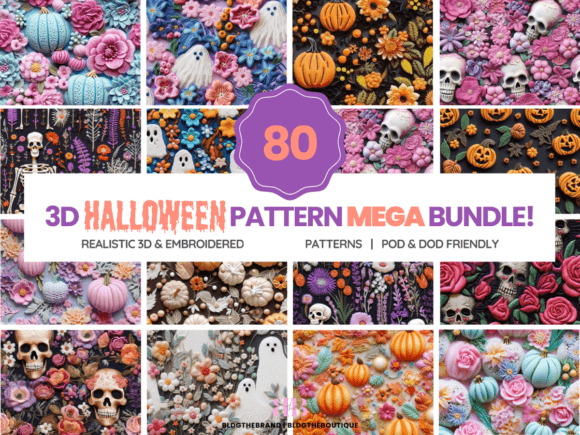
Halloween design is a crowded market. If you search for spooky motifs on any creative marketplace, you will find thousands of jack-o'-lanterns and witches. What sets this collection apart initially is the emphasis on the "3D faux" aesthetic. In machine embroidery, creating actual three-dimensional effects requires specific techniques like heavy padding, high-density fill stitches, and precise underlay. These files promise that textured, raised look without necessarily requiring the most complex digitization skills from the operator.
The visual personality of these patterns feels cohesive. They aren’t just random clip-art pasted together; they seem designed with a consistent weight and balance. For a boutique owner looking to create a unified holiday collection, this consistency is crucial. It allows you to mix and match elements—perhaps a pumpkin motif on a tote bag and a matching patch on a cap—and have them feel like part of the same brand identity rather than mismatched leftovers. The mood is playful yet polished, which is exactly where the money is right now. Consumers are moving away from overly gory or childish Halloween decor and toward sophisticated, crafty aesthetics that fit into modern home decor.
Real-World Application: From File to Finished Product
Let’s talk about how this actually performs when the needle starts moving. I tested these designs with a practical scenario in mind: creating a line of custom apparel and home goods for the upcoming season. Specifically, I looked at how these would translate onto sweatshirts, aprons, and baby items.
Custom Apparel and Sweatshirts
Sweatshirt embroidery is a staple for small businesses during Q4. The challenge here is usually bulk management. You want the design to pop against the thick fabric but not weigh it down. The 80 3d Embroidery Halloween Patterns generally handle this well. The fill stitches appear dense enough to cover the fabric texture completely, which is essential for a clean finish. However, you must pay attention to thread colors. On dark heather grey or black cotton, lighter thread colors might struggle if the density isn't perfect. I recommend testing your primary thread choices on scrap fabric before committing to a full run of fifty hoodies.
Tote Bags and Aprons
For canvas totes and kitchen towels, these designs shine. The repeating nature of many of the files in the bundle makes them ideal for all-over prints or strategic placement on large surface areas. A common mistake designers make is placing a large, dense design too close to the edge of a tote bag strap, causing hoop interference. With eighty options, you have the flexibility to choose smaller, accent-sized motifs for delicate straps or larger centerpieces for the main body. The versatility here supports both minimalist branding and bold statement pieces.
Baby Items and Nursery Decor
There is a surprising amount of softness in some of these patterns. When adapted for baby onesies or nursery pillow covers, the "3D" effect can add a tactile quality that parents love. It transforms a simple gift into something heirloom-quality. However, safety and comfort are paramount. Ensure that the satin stitches around edges are smooth and not abrasive. A rough embroidered patch on a baby’s neck area is a return waiting to happen. Always inspect the back of the stitching for stiffness; if it feels like cardboard, it needs more flexible stabilizer or a lighter stitch type.
Where to Exercise Caution
No file pack is perfect, and knowing where a design fails is just as important as knowing where it succeeds. There are specific scenarios where 80 3d Embroidery Halloween Patterns might not be your best friend.
Small Hoop Sizes and Delicate Fabrics
If you are working on tiny caps, detailed patches, or thin silk blends, you need to scrutinize the stitch density. High-density fills can pucker lightweight fabrics if the underlay isn't optimized. I’ve seen designs look great on screen but collapse into a stiff lump on thin jersey knit. Always test on your actual production fabric. If the design includes intricate details or tiny lettering, ensure your machine’s accuracy can handle it. Small details often get lost or become muddy if the thread tension is slightly off.
Curved Surfaces
Embroidering on curved surfaces like baseball caps or rounded pillow corners requires careful hooping and often specialized software adjustments. While the designs themselves are likely flat vector-based paths, the physical act of embroidering them on a curve can distort the image. Use proper tear-away or cut-away stabilizers to support the fabric, and consider reducing the scale of the design slightly to accommodate the curvature without distortion.
Dense Stitch Areas
Be mindful of areas where multiple fill stitches overlap. This can lead to excessive thickness, making the finished product uncomfortable to wear or difficult to fold for packaging. For products that need frequent washing, such as tea towels or children’s clothing, excessive density can also lead to faster wear and tear on the threads. Check the stitch count relative to the fabric weight.
Practical Designer Notes for Success
To get the most out of this graphics package, follow these practical steps before you start mass-producing:
- Test on Scrap Fabric: Never assume a design will work perfectly on your final material. Test thread contrast, color fastness, and fabric compatibility.
- Check Stitch Density: Look closely at the fill areas. Are there gaps? Is it too dense? Adjust your machine settings or digitization if necessary.
- Review Hoop Size: Ensure the design fits comfortably within your standard hoop sizes. Avoid designs that require awkward re-hooping unless you are experienced in multi-hoop techniques.
- Inspect Small Details: Zoom in on the digital preview. Are the lines crisp? Will tiny elements stitch out clearly?
- Use Proper Stabilizer: The right stabilizer can save a bad stitch job. Match the stabilizer to the fabric weight and stretch.
- Confirm Licensing: Before selling finished items or using these as design assets for clients, double-check the license terms. Some bundles allow commercial use on physical goods but restrict resale of the digital files themselves.
Final Verdict
The 80 3d Embroidery Halloween Patterns bundle offers a solid foundation for anyone looking to capitalize on the spooky season. It provides enough variety to keep your shop fresh and enough consistency to maintain a professional brand image. Whether you are an Etsy seller looking to boost your listings or a hobbyist wanting to create personalized gifts, these files provide good value. Just remember that the magic happens in the execution. Your skill in hooping, threading, and finishing will determine whether these designs become best-sellers or regrettable mistakes. Treat them as tools, not miracles, and you’ll see excellent results.